
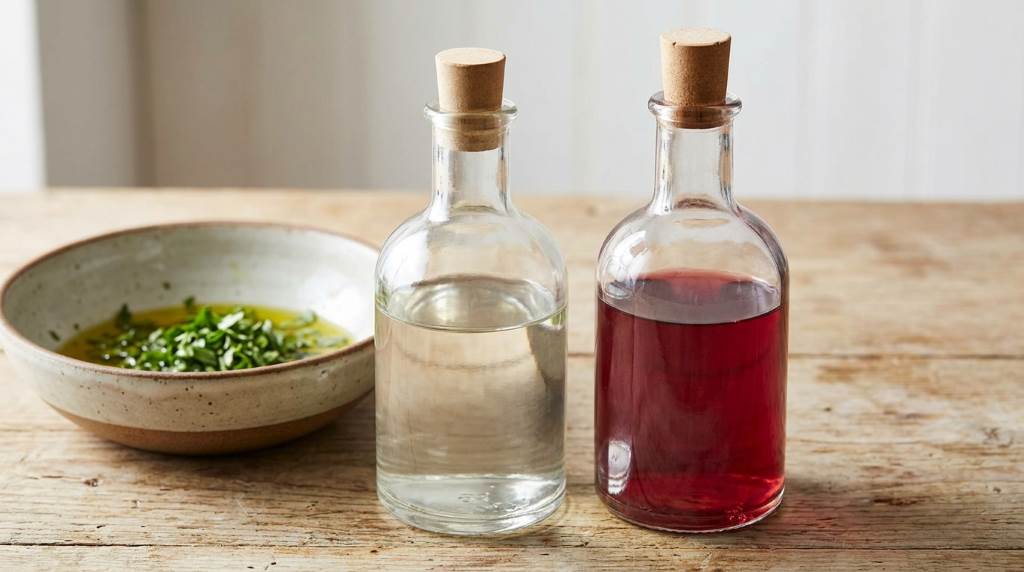
Yes, you can use white vinegar instead of red wine vinegar in many recipes. However, white vinegar tastes sharper, while red wine vinegar brings fruity acidity and mild depth.
Both vinegars commonly contain about 5% acidity, although brands can vary slightly. Therefore, the best substitute depends on your dish, desired flavor, and how much vinegar the recipe needs.
When White Vinegar Works As A Red Wine Vinegar Substitute
White vinegar works best when acidity matters more than color or complex flavor. For example, you can use it in marinades, dressings, pickles, sauces, and some vegetable dishes.
However, its clean, intense acidity can taste noticeably stronger than red wine vinegar. Start with less white vinegar, then adjust gradually until the dish tastes balanced.
For dishes featuring salty ingredients, consider how vinegar interacts with the entire flavor profile. This wine pairing salty food guide also illustrates how acidity can influence salty flavors.
White vinegar also works well when the recipe contains several strong ingredients. Garlic, mustard, herbs, spices, and robust vegetables can easily absorb its sharper character.

Situations Where The Swap Makes Sense
- Salad dressings that contain mustard, herbs, or garlic.
- Quick pickles where acidity remains the primary purpose.
- Marinades containing several aromatic ingredients.
- Sauces where vinegar provides brightness rather than fruity flavor.
- Recipes where vinegar contributes only a small amount of liquid.
What Changes When You Substitute White Vinegar
The biggest difference involves flavor rather than basic acidity. Red wine vinegar usually offers a softer, fruitier profile with subtle fermented character.
White vinegar tastes cleaner, sharper, and more aggressive on the palate. Consequently, replacing it at a one-to-one ratio can make delicate recipes taste harsh.
Color can also change the finished dish, especially in light-colored foods. Red wine vinegar can add a faint reddish tint that white vinegar will not provide.
For a delicate vinaigrette, start with roughly three-quarters of the required white vinegar. Then taste the mixture before adding the remaining amount.
Flavor Differences At A Glance
| Characteristic | White Vinegar | Red Wine Vinegar |
|---|---|---|
| Acidity | Sharp and direct | Bright but generally softer |
| Flavor | Clean and intense | Fruity and mildly complex |
| Color | Clear | Red to reddish-purple |
| Best role | Strong acidic lift | Acidity with added flavor |
If you are unsure about a bottle’s quality, check its aroma and appearance first. This guide explains how tell wine gone bad when wine-based ingredients affect your cooking choices.
How To Substitute White Vinegar Without Ruining The Recipe
The safest approach involves reducing the amount initially and adjusting after tasting. This method gives you control because white vinegar can dominate quickly.
For every 1 tablespoon of red wine vinegar, begin with about 2 teaspoons of white vinegar. Taste the recipe, then add another teaspoon if the dish needs more brightness.
However, this ratio works as a starting point rather than a strict culinary rule. Ingredients such as sugar, oil, salt, fruit, and herbs can change perceived acidity.
For larger batches, mix the substitute separately before adding it to the main dish. That simple step prevents excessive vinegar from becoming difficult to correct.
A Simple Substitution Method
- Measure approximately two-thirds of the required vinegar.
- Add it to the recipe according to the cooking instructions.
- Mix thoroughly so the acidity distributes evenly.
- Taste after the other ingredients have combined.
- Add small amounts until the flavor reaches the desired balance.
For salad dressings, taste the finished dressing with the actual greens. Oil, lettuce, cheese, nuts, and vegetables can soften or amplify acidity.
For cooked sauces, allow the mixture to simmer briefly before making final adjustments. Cooking can soften sharp vinegar notes and integrate them with other flavors.
Best Recipes For Using White Vinegar Instead
Some recipes tolerate this substitution particularly well because they emphasize bold flavors. Others depend heavily on red wine vinegar’s distinctive character and deserve more caution.
White vinegar performs especially well in quick pickles because its bright acidity cuts through vegetables. It can also work in coleslaw, cucumber salads, and strongly seasoned bean salads.
Marinades provide another useful application because vinegar usually serves as one part of a larger flavor system. Olive oil, garlic, herbs, pepper, mustard, and seasonings can balance white vinegar’s sharper edge.
You can also use white vinegar in sauces containing tomatoes or other naturally acidic ingredients. In those recipes, the additional acidity often blends smoothly instead of standing alone.
Recipes That Need More Care
- Delicate vinaigrettes with few ingredients.
- Sauces where red wine vinegar provides noticeable character.
- Fruit-forward dressings that rely on softer acidity.
- Recipes where the vinegar remains largely uncooked.
- Classic dishes where color contributes to the presentation.
Wine-based cooking ingredients also deserve sensible storage because oxidation can change their flavor. If you keep wine for cooking, learn store wine after opening properly to preserve useful quality.
When a recipe specifically celebrates red wine vinegar, consider using another wine vinegar instead. White wine vinegar usually provides a closer flavor match than distilled white vinegar.
Better Alternatives If You Do Not Have Red Wine Vinegar
White wine vinegar often makes one of the closest substitutions because it provides clean acidity with greater subtlety. Sherry vinegar can also work when you want deeper flavor and moderate acidity.
Apple cider vinegar offers another practical option, especially for salads, slaws, and marinades. Its mild fruitiness can complement recipes that would otherwise taste too sharp with white vinegar.
Rice vinegar works particularly well in recipes where gentle acidity matters. However, seasoned rice vinegar contains added sugar and salt, so account for those ingredients.
Balsamic vinegar can substitute in selected recipes, but it changes the dish considerably. Its sweetness, darker color, and richer flavor make it unsuitable for many simple vinaigrettes.
Choose The Substitute Based On The Dish
| Recipe Type | Recommended Substitute | Why It Works |
|---|---|---|
| Simple vinaigrette | White wine vinegar | Balanced and relatively mild |
| Coleslaw | White vinegar | Provides strong brightness |
| Marinade | Apple cider vinegar | Adds acidity with mild fruitiness |
| Bean salad | White vinegar | Cuts through rich ingredients |
| Rich sauce | Sherry vinegar | Adds acidity with deeper flavor |
How To Balance White Vinegar After Substituting
If your dish tastes too sharp, do not immediately dilute it with large amounts of water. Instead, balance the acidity using ingredients that complement the recipe.
A small amount of sweetness can soften aggressive acidity without eliminating brightness. Try sugar, honey, maple syrup, or another suitable sweetener when the recipe supports it.
Additional oil can also round out the flavor in dressings and marinades. Add it gradually because too much oil can make the dish heavy rather than balanced.
Salt requires particular care because vinegar can make food seem less seasoned than it actually is. Taste after adjusting acidity, then add salt only when the overall flavor needs it.
Quick Fixes For An Overly Sharp Dish
- Add a small amount of olive oil to dressings.
- Add a little honey or sugar when appropriate.
- Increase the other ingredients proportionally in larger recipes.
- Add herbs or aromatics to create more flavor depth.
- Allow cooked sauces to simmer before making another adjustment.
These adjustments work because good cooking depends on balance rather than acidity alone. The goal is brightness that supports the other flavors instead of overwhelming them.
Can You Use White Vinegar In Salad Dressing?
Yes, white vinegar can work very well in salad dressing when you use it carefully. Its sharp flavor pairs naturally with oil, mustard, herbs, garlic, and robust greens.
For a basic dressing, combine oil, white vinegar, mustard, salt, and black pepper. Start with less vinegar than the recipe requests, then increase it according to taste.
However, delicate greens may benefit from a gentler vinegar. White wine vinegar or apple cider vinegar can create a softer dressing with greater flavor complexity.
Can You Use White Vinegar For Pickling?
Yes, white vinegar is commonly useful for quick pickling because it provides straightforward acidity. Its neutral color also helps preserve the natural appearance of many vegetables.
For refrigerator pickles, follow a tested recipe that specifies the correct vinegar concentration. Do not casually alter vinegar proportions when preparing shelf-stable canned foods.
Food preservation requires controlled acidity for safety, not simply pleasant flavor. Therefore, use tested preservation instructions when processing pickles for long-term storage.
When Should You Avoid The Substitution?
Avoid the swap when red wine vinegar provides an important flavor rather than simple acidity. This distinction matters in recipes with few ingredients because every flavor becomes more noticeable.
You should also reconsider the substitution when the recipe depends on subtle fruity notes. White vinegar can supply acidity, but it cannot fully reproduce red wine vinegar’s fermented character.
Finally, consider appearance when presentation matters. Red wine vinegar can contribute attractive color, while white vinegar leaves the mixture visually unchanged.
Frequently Asked Questions
Can I Substitute White Vinegar For Red Wine Vinegar?
Yes, but start with less white vinegar because its sharper flavor can overpower the recipe.
What Is The Best Substitute For Red Wine Vinegar?
White wine vinegar is usually one of the closest substitutes because it offers balanced acidity and a milder flavor.
Can I Use White Vinegar In A Vinaigrette?
Yes, white vinegar works in vinaigrettes when you balance its stronger acidity with oil and other ingredients.
Is White Vinegar Stronger Than Red Wine Vinegar?
White vinegar generally tastes sharper, even when both products have similar acidity levels.
Can I Substitute Vinegar One For One?
You can, but using about two-thirds initially gives you better control over the final flavor.
Final Verdict
White vinegar can replace red wine vinegar in many everyday recipes, especially when acidity matters most. The key difference involves flavor intensity, so begin with a smaller amount and adjust gradually.
For delicate dishes, choose white wine vinegar or another mild alternative when available. For bold salads, marinades, pickles, and sauces, white vinegar can deliver excellent results.
Next time you run out of red wine vinegar, do not abandon the recipe immediately. Start cautiously, taste thoughtfully, and adjust the balance until the finished dish tastes right.