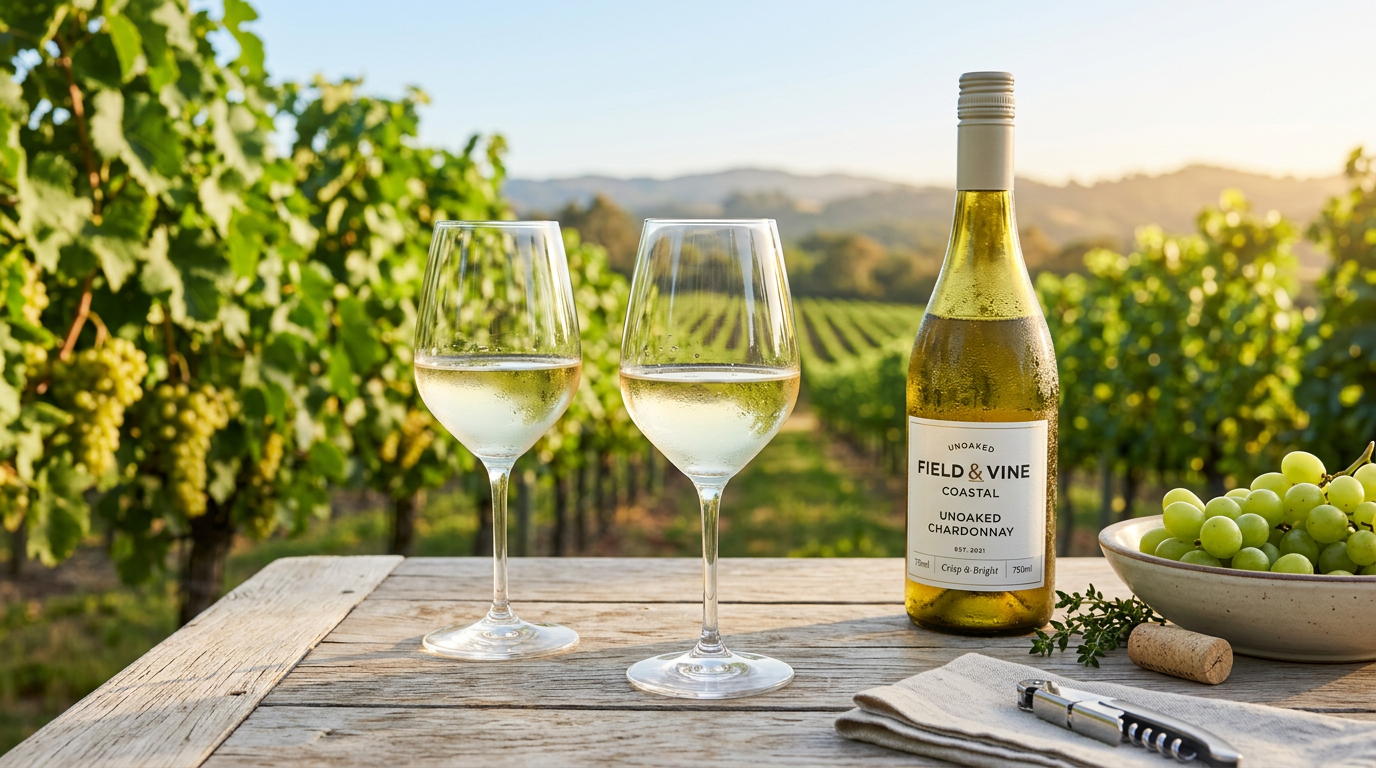
What is a good unoaked chardonnay? Most wine drinkers ask that question after a disappointing glass: flat, watery, or sharp, with none of the appeal they expected. The style has a devoted following, but quality varies widely on store shelves.
Quick answer: A good unoaked chardonnay tastes fresh and balanced, with clear fruit, lively acidity, and a clean finish. Look for cool-climate origins, careful fermentation, and lees aging that adds texture without oak flavor. Expect flavors like green apple, lemon, pear, and wet stone.
This article explains what makes the style work, how producers achieve quality, and which regions deliver it. You will also learn the common myths to ignore and how to choose a bottle with confidence.
Definition and background
An unoaked chardonnay is a white wine made from the Chardonnay grape in which the juice and wine never touch oak. No barrel fermentation, no oak chips, and no oak staves. The grape’s own character sits in the foreground rather than in the background.
Chardonnay is naturally neutral. That is not an insult; it is the grape’s great strength. It absorbs whatever technique the winemaker applies. Ferment it in steel, age it in oak, put it through malolactic fermentation, or leave it on its lees, and you get four different wines from the same vineyard. “Unoaked” is a style decision, not a grape variety.
The style became a deliberate counterpoint to the heavily oaked chardonnays of the 1980s and 1990s. Many drinkers wanted the grape without the butter and vanilla. Producers responded by fermenting in stainless steel and bottling young.
Quality starts in the vineyard. Cool nights preserve acidity. Long, slow ripening builds flavor depth at lower sugar levels. A warm site picked early can still taste thin, because flavor compounds lag behind sugar. That is why so many excellent unoaked examples come from cool coastal regions.
It also helps to understand what “oak” means chemically. Barrel contact contributes aromatic compounds like vanillin and oak lactones, plus gradual oxygen exposure that softens tannins and deepens color. An unoaked wine simply avoids those inputs entirely, which is why its fruit reads brighter and its texture comes from lees and acidity instead of wood-derived tannin. Measuring dissolved oxygen during bottling matters just as much, because excess oxygen can flatten the very freshness the style depends on. Producers who bottle under screw cap or with careful inert-gas handling protect those delicate aromatics far longer.
Why the wine world needed a new label
For decades, “Chardonnay” on a label told you the grape but not the style. The unoaked designation solved a practical problem. A drinker who wanted a lean, bright white could now find it without memorizing producer names.
Terminology also matters. “Unoaked” is not a legal term in most regions, so producers apply it voluntarily. In our tasting experience, labels that say “stainless steel fermented” or “no oak” are usually accurate. Still, the only guaranteed proof is the wine in the glass.
How a good unoaked chardonnay works
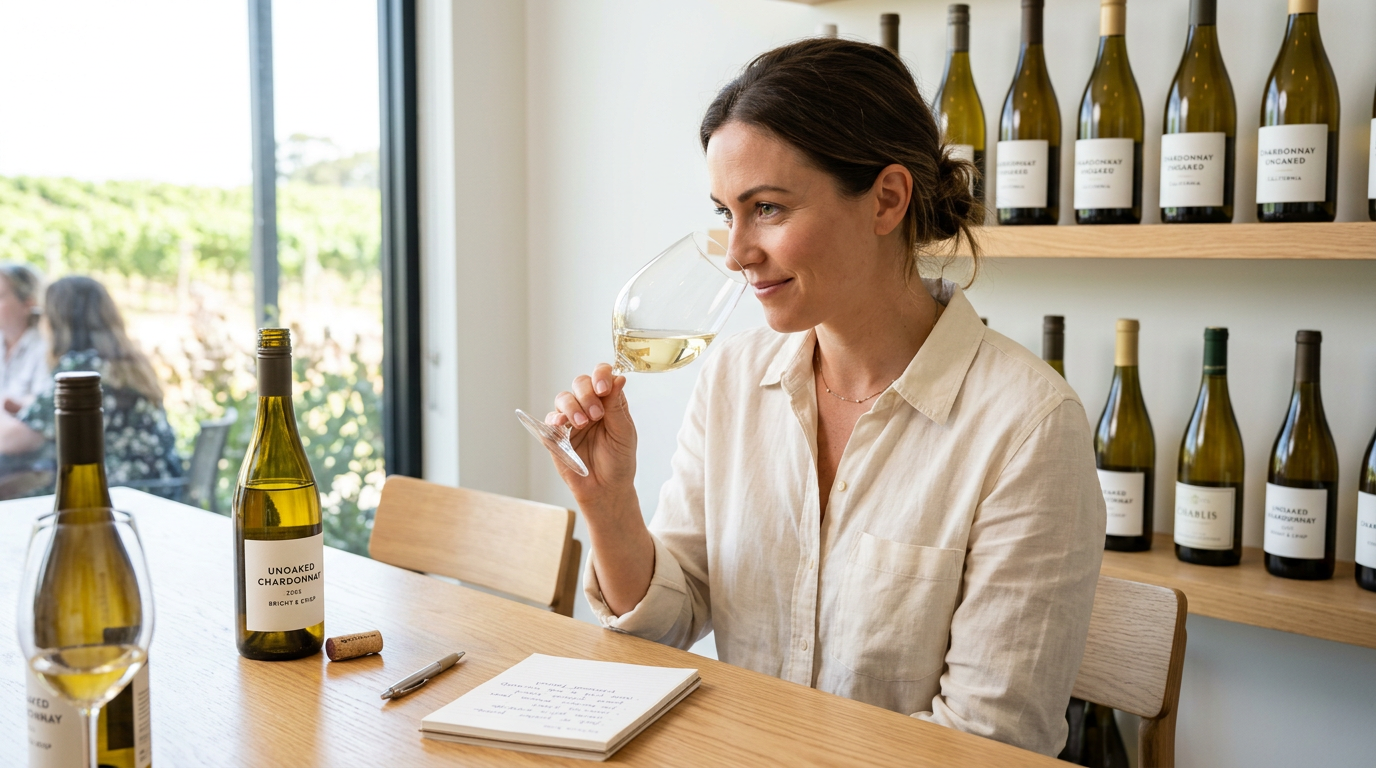
Quality in this style comes down to four winemaking levers: fermentation vessel, fermentation temperature, lees contact, and acidity management. Each shapes texture, aroma, and finish. Get them right, and a humble steel tank produces a wine with real depth.
Fermentation vessel. Stainless steel is the default choice because it is inert. It preserves fruit purity and keeps oxygen away. Concrete and amphora also count as unoaked, and both add subtle texture through micro-oxidation. A winemaker chasing freshness usually picks steel.
Temperature control. Cool fermentation, typically around 55 to 60°F, preserves delicate aromatics. Warm fermentation speeds things up but blows off the volatile compounds that make the wine smell like fruit rather than yeast.
Lees aging. After fermentation, the spent yeast cells settle as a fine sediment called lees. Stirring them, a technique called bâtonnage, releases proteins and polysaccharides. These add body and a creamy mouthfeel without a trace of oak. In our tasting, extended lees contact is the single biggest difference between a thin unoaked chardonnay and a serious one.
Acidity management. The grape’s natural acidity is the spine of the wine. Cool-climate fruit holds it; warm-climate fruit often loses it. Producers may adjust with tartaric acid, a legal and common practice, or blend sites. A good unoaked chardonnay feels lively, never flabby and never sour enough to pucker.
Vineyard timing sits above all four levers. Picking a few days early preserves malic acid and keeps alcohol in check, while waiting for fuller flavor can push sugar past the point where the wine still feels taut. That harvest decision explains much of the variation between two wines from neighboring sites, and it is why vintage notes matter when comparing bottles from the same producer year to year.
What balance tastes like in the glass
Balance means no single element dominates. Fruit should sit level with acidity. Alcohol, often 12.5 to 13.5 percent, should feel integrated. The finish should be clean and medium-length rather than abrupt or cloying. When all four levers align, the wine feels complete.
The role of malolactic fermentation
Malolactic fermentation converts sharp malic acid into softer lactic acid. Done fully, it creates a buttery, rounded texture. Done partially or skipped, the wine stays crisp. Many unoaked producers choose partial conversion. This small choice explains why two unoaked wines from the same region can taste surprisingly different.
Real-world examples
The best way to understand quality is to taste across regions. Each place stamps the grape with its own signature, and comparing them teaches more than any tasting note.
A practical comparison: serve a village Chablis, a Marlborough bottling, and a Sonoma Coast example side by side at the same temperature. The Chablis will show the most tension and salinity, the New Zealand wine the most aromatic lift, and the California wine the fullest mid-palate. Note the alcohol levels on the back labels, too. A 12.5 percent Chablis beside a 13.5 percent coastal California wine illustrates how ripeness shapes weight and how a good unoaked chardonnay can still feel rich without any barrel.
A less obvious benchmark is English still wine. Sussex and Hampshire producers work with cool, marginal climates and chalky soils similar in spirit to Chablis, and their unoaked chardonnays often show brisk green apple and a subtly chalky finish. Bottlings from producers such as those in the South Downs typically cost between $20 and $35 and are worth seeking out for anyone who wants a European frame of reference beyond France.
Chablis, France
Chablis is the benchmark. The region’s cool climate and limestone soils produce taut, mineral-driven wines with green apple and citrus. Premier cru and grand cru vineyards add depth without oak. In our tasting, young Chablis often tastes almost salty, with a piercing finish that begs for oysters. Prices range from budget village bottlings to age-worthy crus.
New Zealand and Australia
Marlborough chardonnay delivers bright citrus and white peach. Australian producers in Margaret River and the Adelaide Hills make fuller styles with melon and a textured mid-palate. Many carry screw caps, which preserve freshness well. These wines typically cost less than Burgundy and overdeliver.
California and Oregon
California’s Sonoma Coast and Santa Barbara County make outstanding cool-climate unoaked chardonnay. Oregon’s Willamette Valley is increasingly strong too. We found that coastal fog and afternoon breezes keep acidity intact. Ask for a “stainless steel” bottling to avoid the oak styles the state is famous for.
Emerging and value regions
Chile, South Africa, and the Czech Republic all produce creditable unoaked versions. South African examples from cooler coastal sites show real finesse. At lower price points, look for single-vineyard bottlings, which usually receive more care than anonymous blends.
Common misconceptions
Myths about unoaked chardonnay discourage drinkers from trying excellent bottles. Here are the ones we hear most often.
“Unoaked means no texture.” This is the most persistent myth. Lees contact, concrete fermentation, and partial malolactic fermentation all build body. Extended lees aging can give a wine a creamy mouthfeel that rivals oak-aged styles.
“Unoaked is always better than oaked.” Not true. Oak-aged chardonnay can be magnificent when the winemaking is restrained. The choice is about preference, not superiority. A heavy-handed unoaked wine can be just as hollow as an over-oaked one.
“All unoaked chardonnay tastes the same.” Region, vintage, and technique change the wine dramatically. Chablis tastes nothing like a warm-climate Australian example. Within one appellation, producer style varies widely.
“Screw caps signal cheap wine.” Caps preserve freshness and are standard for this style in New Zealand and Australia. We consider them a quality signal, not a warning.
“Unoaked wine does not age.” Some unoaked chardonnays age beautifully for five to ten years, especially Chablis and coastal California bottlings. Acidity and lees texture support aging without any barrel influence.
“You should serve it ice cold.” Serve too cold, and you mute the aromatics. We recommend 45 to 50°F for unoaked chardonnay. Too cold, and the wine tastes flat and closed.
“Unoaked chardonnay is always lean and green.” Underripe fruit gives that impression, but it reflects picking decisions rather than the absence of oak. A well-farmed cool site picked at full flavor ripeness delivers roundness along with freshness.
“Steel tanks are the only unoaked option.” Concrete eggs, amphorae, and even neutral, well-seasoned older barrels that impart no detectable oak character all count. Claiming otherwise narrows the category more than the winemaking reality warrants.
What to look for when buying
- Origin: Cool-climate regions generally deliver better acidity.
- Vintage: Recent vintages are usually freshest.
- Barrel language: Watch for “barrel fermented” or “oak aged” if you want no oak flavor.
- Closure: Screw caps preserve freshness well.
- Lees aging: Look for the term “sur lie” or “lees aged” on the label; it signals texture.
FAQ
Is a good unoaked chardonnay always more expensive?
No. Prices range from about $10 to well over $60. Excellent values exist in Chile, South Africa, and parts of Australia. Price reflects reputation and region as much as quality, so taste before assuming a higher price is better.
Does unoaked mean no oak flavor at all?
In principle, yes; the wine never contacts oak. In practice, a small percentage of producers use oak chips or staves without calling the wine “oaked.” Regulations vary by country, so the label is a guide, not a guarantee.
How should I store and serve unoaked chardonnay?
Store bottles cool and away from light. Serve at 45 to 50°F, ideally after 20 minutes in the fridge. A standard wine glass is fine; a tulip shape concentrates the aromas well. Drink most examples within two to three years.
Can unoaked chardonnay pair with red meat?
It struggles with steak but works well with roast chicken, pork, seafood, and creamy pasta. Its acidity cuts through richness, so it handles butter and cream surprisingly well.
How do I spot a bad bottle before buying?
Read the back label for “stainless steel” or “no oak,” and check the vintage. A recent vintage from a cool region is the safest bet. If the shop offers a taste, look for a clean, fresh smell that is not dull or tired.
Conclusion
A good unoaked chardonnay is not about what is missing; it is about what the grape shows instead. Cool origins, careful fermentation, and thoughtful lees aging deliver first. Look for clearly labeled, recent vintages from regions like Chablis, Marlborough, Sonoma Coast, or coastal South Africa. Expect bright acidity, clean fruit, and a textured finish that never needs oak to feel complete.
Our advice: pick one bottle from each region in this article and taste them side by side. That comparison will teach you more in one evening than any label reading. Start with a village Chablis and a New Zealand bottle, serve both at 45 to 50°F, and let the wines speak for themselves.