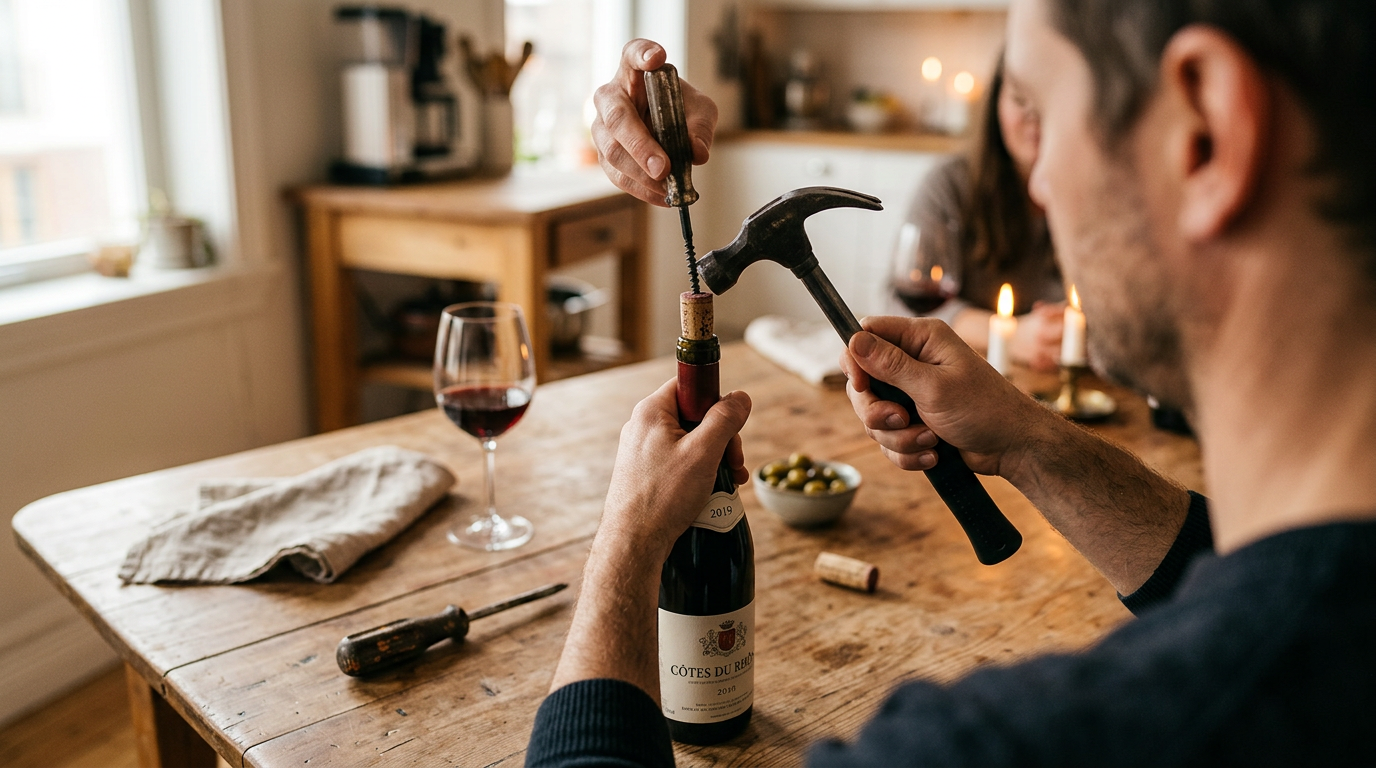
Dinner is ready, the guests are at the table, and the corkscrew is missing. Learning how to open a wine bottle without a wine opener is a skill worth having, and it takes about two minutes with ordinary household items. The good news is that the cork does not need special equipment; it needs steady pressure and a little patience.
Quick answer: Push the cork inward with the rounded handle of a wooden spoon or a strong pen, working it slowly downward until it drops into the bottle. Alternatively, use a long screw driven into the cork and pull with pliers. The key is to press straight, protect your eyes, and keep the bottle upright so the wine does not spill.
This guide covers the tools you need, the two most reliable methods, tips for clean results, and the mistakes that turn a simple job into a mess.
What you need before starting
Before you try anything, gather the right tools and set up a safe workspace. A clean, dry countertop works best. Keep a cloth nearby to wipe the neck and your hands. Avoid working over carpet, and make sure no children or pets are near the bottle while you press.
You only need tools you already own. You will need a long, strong screw, such as a wood screw or a drywall screw four to five inches long. A screwdriver or a drill to drive it is also useful. Pliers or a locking wrench help you grip and pull. As a backup, pick a heavy wooden spoon or a sturdy metal pen. A small towel protects your hands and cushions the bottle.
Check that the screw head is wide enough for your pliers to clamp securely, and test the grip on a scrap of wood or an old cork before you commit to the real bottle. A small flashlight or your phone’s light helps you inspect the cork for cracks before you begin.
Choosing the right pressing tool
For the push-in method, the rounded handle of a wooden spoon is the gentlest option. The handle acts as a soft plunger. It presses evenly and reduces the risk of cracking the rim. A metal pen works in a pinch, but it is slick and can slip if your hands are wet. In our testing, a wooden handle gave the steadiest pressure across many bottles.
For the screw method, choose a screw that is longer than the cork. A standard wine cork is about one and a half to two inches long. A screw under three inches may not bite deep enough to hold during the pull.
Preparing the workspace
Stand the bottle upright on a flat surface. Wrap a towel around the base if you plan to press hard. Place the bottle away from the edge of the table. Lay out your tools within reach so you do not have to hunt for them mid-task. Good light helps you see the cork clearly and avoid spilling.
Optional safety gear
A pair of thin work gloves protects your palms and improves grip. Safety glasses are not a bad idea if you have them. These tools cost nothing if you already own them, which makes this method ideal for a last-minute party.
Step-by-step instructions
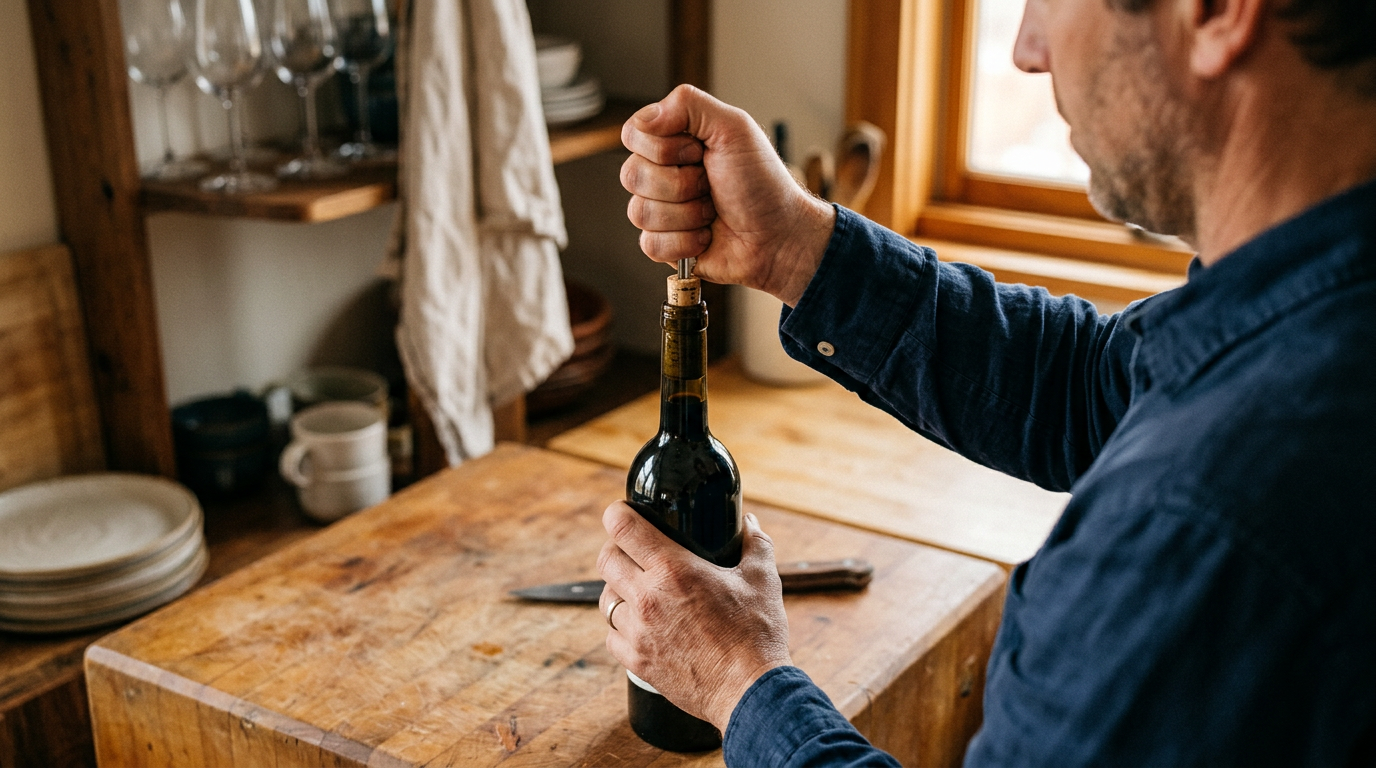
The two methods below work on most still wines. Pick the one that matches your tools and your risk tolerance. Follow the steps in order for the cleanest result.
If the screw feels loose after the first few turns, back it out and start a fresh hole an inch away rather than forcing it deeper. Once the cork has lifted about an inch, steady the bottle with your free hand on the base so the pull stays vertical; pulling sideways against a tilted screw often breaks the cork in half. For the spoon method, pause every few seconds to confirm the handle is still centered, because the cork tends to shift once it clears the inner lip of the neck. When the cork finally drops, keep the bottle still for a moment so the wine settles before you pour.
Method 1: Push the cork in with a wooden spoon
- Dry the bottle neck and the spoon handle. Wet surfaces slip and cause accidents.
- Hold the bottle firmly with your non-dominant hand, base on the counter.
- Place the narrow end of the wooden spoon handle against the center of the cork.
- Press straight down with steady pressure; it should shift a few millimeters.
- Keep pressing until the cork drops into the bottle with a soft pop.
- Wipe the rim, pour slowly, and fish the cork out with a fork if desired.
Method 2: Pull the cork with a screw and pliers
- Drive a long screw into the center of the cork at a slight angle so it bites wood.
- Leave about an inch of screw exposed above the cork so pliers can grip it.
- Grip the screw head with pliers and pull up while twisting gently.
- Work the cork out slowly; rushing can crumble the cork into the wine.
- Remove the cork, wipe the neck, and pour.
Both methods take under five minutes. Method one is faster, while method two keeps the cork whole—a plus if you plan to recork the bottle.
Tips for better results
A few small habits separate a clean open from a spilled one. These tips come from testing both methods on cheap and expensive bottles alike.
If the cork starts to crumble around the screw, stop pulling and switch to the spoon method rather than fighting a failing grip. A few drops of water on a stubborn cork can soften it slightly, but do not soak it, since a swollen cork is harder to push through the neck. Work in good light so you can see how far the cork has traveled and catch any cracks in the rim early. Keep your pouring glass ready before you start, so the wine goes straight from bottle to glass without an awkward pause.
Control pressure and angle
Press straight down and keep the bottle steady. Angling the spoon or screw sideways can crack the glass rim, which risks injury and ruins the wine. Keep the bottle upright so the cork has room to fall cleanly.
Chill the bottle first
A cold bottle holds its carbonation and pressure better, and a chilled cork is slightly firmer. If your wine is warm, place it in the fridge for fifteen minutes before opening. This small step reduces foam and spray when the cork drops.
Choose the right screw
Use a screw with a wide thread and a flat head. Drywall screws work well because the threads grab cork firmly. Avoid screws that are too thin; they strip out of the cork before you can pull. Test the fit by hand before driving it fully.
Keep a towel handy
A towel absorbs drips and gives you a dry grip. Wrap it around the neck before you press and keep a second one nearby for wiping the bottle. In our experience, a dry grip matters more than strength.
Practice on a cheap bottle
Buy an inexpensive bottle and try the method once before relying on it for a special occasion. Familiarity builds control. Once you have done it twice, the motion becomes natural and quick.
Common mistakes to avoid
Most failures with this technique come from a few predictable errors. Watch for these and your success rate rises sharply.
Watch for the cork sliding in at an angle rather than straight down. An off-center push often means you are holding the bottle at a slight tilt, so set it back on the counter and check the spoon handle lines up with the cork’s center before adding pressure. Another frequent error is using a screw with a worn or rounded head, which gives pliers nothing to grip once the cork starts to move. If the screw threads are dull, it may tear a channel through the cork instead of holding it, leaving crumbled pieces behind. Finally, many people skip drying the bottle after a spill and keep pressing with wet hands, which turns a controlled push into a slippery shove.
Pushing too hard or too fast
Corking pressure that builds too fast can send the cork flying or crack the rim. Use slow, steady pressure instead of a sudden shove. If the cork resists, check your angle rather than pushing harder.
Working on an unstable surface
A bottle rolling on an uneven table is an accident waiting to happen. Only work on a flat, sturdy surface. Never balance the bottle on a cushion or in a sink full of dishes. This single mistake causes more spills than any other.
Using the wrong tool
Fingernails, knives, and thin pens fail or break. Sharp tools can also scratch or stab. Stick to the wooden spoon and long screw combination. In our testing, household toys and cheap plastic handles bent or snapped under pressure.
Forgetting to protect your eyes
Fragments and sudden pops are rare, but they happen. Keep your face away from the bottle neck while pressing. Wear glasses if you have them; it is a small precaution for a big payoff.
Forgetting to clean up afterward
Cork crumbs and spills are common. Wipe the rim and neck before pouring so the wine does not pick up debris. A quick clean keeps the bottle presentable when you serve it to guests.
FAQ
What is the easiest way to open a wine bottle without a wine opener?
Pushing the cork in with the rounded handle of a wooden spoon is the easiest method. It needs one tool and takes about a minute. The screw-and-pliers method works too, though it requires more equipment and a steadier hand.
Will the cork ruin the wine if it falls into the bottle?
Not usually. A whole cork floats and is easy to remove with a fork or small strainer before serving. The bigger risk is crumbs, which you can filter out by pouring through a fine mesh or cheesecloth. The wine stays fine as long as you do not leave the cork in for days.
Can I try this on sparkling wine or a screw-top bottle?
Sparkling wine is under pressure and should not be forced open this way. Stick to still wine for these methods. Screw-top bottles simply twist open and need no tools at all.
Does this method work if the cork is already broken or crumbling?
It is riskier. A broken cork may crumble into the wine. Use the screw method and avoid pressing, or let a professional handle it. Old, dry corks fail more easily, so open those carefully.
How long does the process take?
About two to five minutes with the spoon method. The screw method may take longer if you need to locate tools. Either way, it is faster than running to the store.
Conclusion
Opening a wine bottle without an opener comes down to steady pressure, the right simple tool, and a safe setup. The wooden spoon method is quickest, while the screw method keeps the cork intact. Both work on still wine and use items you already own.
Avoid rushing, unstable surfaces, and overly strong tools. Keep your eyes protected and your grip dry, and the job will go smoothly.
Next time the corkscrew goes missing, grab a long screw or a wooden spoon and try it once. It is a small skill that makes any dinner easier, and with one practice bottle you will have it mastered.