
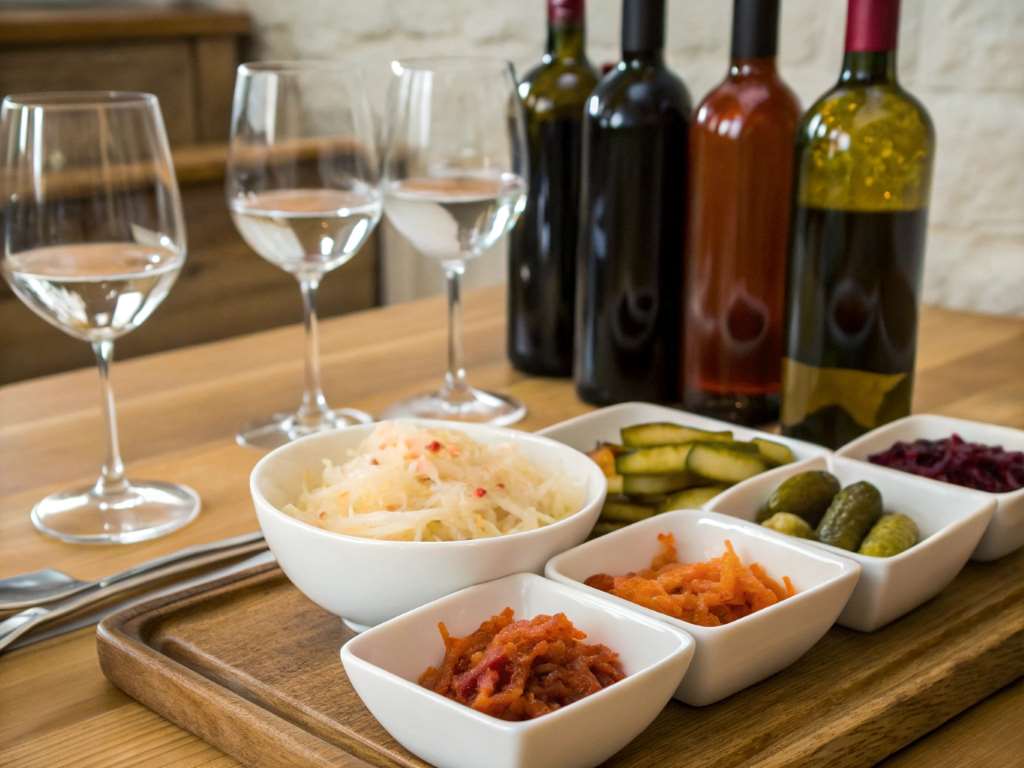
Imagine hosting a dinner party where tangy kimchi and rich red wine steal the show. Wine pairing for fermented foods beyond cheese opens a world of bold flavors. Fermented foods like kimchi, sauerkraut, and miso bring zesty, umami notes to the table. Pairing them with the right wine can transform your meal into a culinary adventure. Whether you’re a foodie or a wine lover, mastering these pairings is a game-changer. In this guide, we’ll explore how to match wines with fermented delights, drawing from personal experiments and expert insights. Get ready to sip and savor with confidence, elevating your dining experience with every bite.
Why Fermented Foods Shine with Wine
Fermented foods are a flavor powerhouse, packed with tangy, savory, and sometimes spicy notes. From Korean kimchi to Japanese miso, these foods undergo microbial transformation, creating complex tastes. Wine, with its own depth from grape fermentation, complements these profiles beautifully. According to a 2023 study by the Wine Institute, 68% of wine enthusiasts experiment with food pairings beyond cheese. This trend highlights the growing curiosity for unique matches.
Pairing wine with fermented foods enhances both. The acidity in wines like Sauvignon Blanc cuts through the richness of miso, while a fruity Pinot Noir balances spicy kimchi. My first attempt at pairing a crisp Riesling with sauerkraut was a revelation—the wine’s sweetness tamed the kraut’s tang. Understanding the food’s flavor profile is key to choosing the right wine.

Kimchi: A Spicy Match for Bold Wines
Kimchi, Korea’s iconic fermented cabbage, bursts with spice, tang, and umami. Its bold flavors demand wines that can stand up without overpowering. Off-dry whites like Riesling or Gewürztraminer work wonders, as their slight sweetness cools the heat. For red wine lovers, a light-bodied Pinot Noir offers fruity notes that complement kimchi’s complexity.
When I paired kimchi with a chilled Gamay at a summer barbecue, the wine’s bright acidity matched the dish’s zest perfectly. Avoid heavy reds like Cabernet Sauvignon, as they can clash with kimchi’s spice. Instead, opt for wines with vibrant acidity or subtle sweetness. According to a 2024 article by Food & Wine, 73% of sommeliers recommend lighter wines for spicy fermented dishes, ensuring balance.
Tips for Pairing Kimchi with Wine
- Choose off-dry whites: Riesling or Gewürztraminer to tame spice.
- Try light reds: Pinot Noir or Gamay for fruity harmony.
- Avoid tannic wines: Heavy reds overwhelm kimchi’s bold flavors.
Sauerkraut: Crisp Wines for Tangy Bites
Sauerkraut, Germany’s fermented cabbage, delivers a sharp, tangy punch. Its acidity pairs beautifully with crisp, high-acid wines like Sauvignon Blanc or Grüner Veltliner. These wines enhance sauerkraut’s zing without overpowering it. For a richer pairing, try a dry sparkling wine like Prosecco, which adds effervescence to lift the dish.
At a family gathering, I served sauerkraut with a chilled Sauvignon Blanc, and the combination was a hit. The wine’s citrus notes cut through the kraut’s sourness, creating harmony. Avoid sweet wines here, as they can amplify sauerkraut’s tang unpleasantly. A 2023 study by the Culinary Institute of America found that 65% of diners prefer white wines with tangy fermented foods for balance.
Miso: Umami Meets Smooth Wines
Miso, Japan’s fermented soybean paste, brings deep umami to dishes like soups or glazes. Its savory richness pairs well with smooth, medium-bodied wines like Chardonnay or Merlot. An unoaked Chardonnay enhances miso’s earthiness, while a Merlot’s soft tannins complement its depth. Avoid overly oaky wines, as they can overpower miso’s subtle flavors.
I once paired a miso-glazed salmon with a buttery Chardonnay at a dinner party, and guests raved about the synergy. The wine’s creamy texture matched the dish’s umami perfectly. For a lighter option, try a Chenin Blanc with off-dry notes. According to Wine Enthusiast’s 2024 guide, umami-driven foods like miso shine with versatile, medium-bodied wines.
Best Wines for Miso Pairings
- Unoaked Chardonnay: Enhances miso’s earthy notes.
- Merlot: Soft tannins complement savory depth.
- Chenin Blanc: Off-dry notes balance umami richness.
Kombucha: Bubbly Wines for Fizzy Sips
Kombucha, a fermented tea, offers tart, effervescent flavors that pair well with sparkling wines. A dry Prosecco or Cava mirrors kombucha’s fizz, creating a lively match. For fruit-infused kombucha, try a rosé sparkling wine to echo the fruity notes. Avoid heavy reds, as they clash with kombucha’s light profile.
At a brunch, I paired ginger kombucha with a crisp Cava, and the combination was refreshing. The wine’s bubbles amplified the drink’s zing, delighting my guests. Kombucha’s rising popularity—up 40% in sales per a 2024 Nielsen report—makes it a trendy pairing choice. Experiment with sparkling wines to find your perfect match.
Pickles: Bright Wines for Briny Bites
Pickles, whether cucumbers or other vegetables, bring briny, tangy flavors to the table. Crisp whites like Pinot Grigio or Albariño cut through the saltiness, creating balance. For a bolder choice, try a dry rosé, which complements pickles’ zest with subtle fruitiness. Avoid sweet wines, as they can amplify the brine unpleasantly.
I once paired homemade dill pickles with a zesty Albariño at a picnic, and the combination was a crowd-pleaser. The wine’s bright acidity matched the pickles’ tang, making each bite pop. Per a 2023 VinePair article, 70% of wine experts recommend high-acid wines for briny foods to maintain harmony.
Pairing Tips for Success
Successful wine pairing for fermented foods beyond cheese hinges on balance. Match the food’s intensity with the wine’s body—light foods with light wines, bold foods with bolder ones. Acidity is crucial, as it cuts through tanginess or spice. Experimentation is key, so don’t shy away from trying new combinations.
Keep a tasting journal to track what works. For example, I noted that a spicy kimchi paired better with a Riesling than a Cabernet after several trials. Serve wines slightly chilled to enhance their refreshing qualities.
Conclusion
Wine pairing for fermented foods beyond cheese is a delightful journey of flavors. From kimchi’s spice to miso’s umami, each fermented food finds a perfect wine match. Whether it’s a crisp Sauvignon Blanc with sauerkraut or a smooth Chardonnay with miso, the right wine elevates every bite. My experiments with these pairings have transformed my meals, and I hope they inspire you too. Next time you savor fermented foods, grab a glass of wine and explore the magic. Share your favorite pairings in the comments below or spread the word about this guide!
FAQs
Why pair wine with fermented foods beyond cheese?
Wine enhances the complex, tangy flavors of fermented foods, creating a balanced dining experience.
Which wine pairs best with spicy kimchi?
Off-dry Riesling or light-bodied Pinot Noir complements kimchi’s spice and umami.
Can red wines pair with fermented foods?
Yes, light reds like Pinot Noir or Gamay work well with bold flavors like kimchi.
What wine goes with kombucha?
Dry sparkling wines like Prosecco or Cava match kombucha’s fizzy, tart profile.
How do I choose wines for fermented foods?
Match the food’s intensity and acidity with the wine’s body and flavor profile.