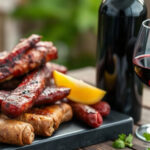
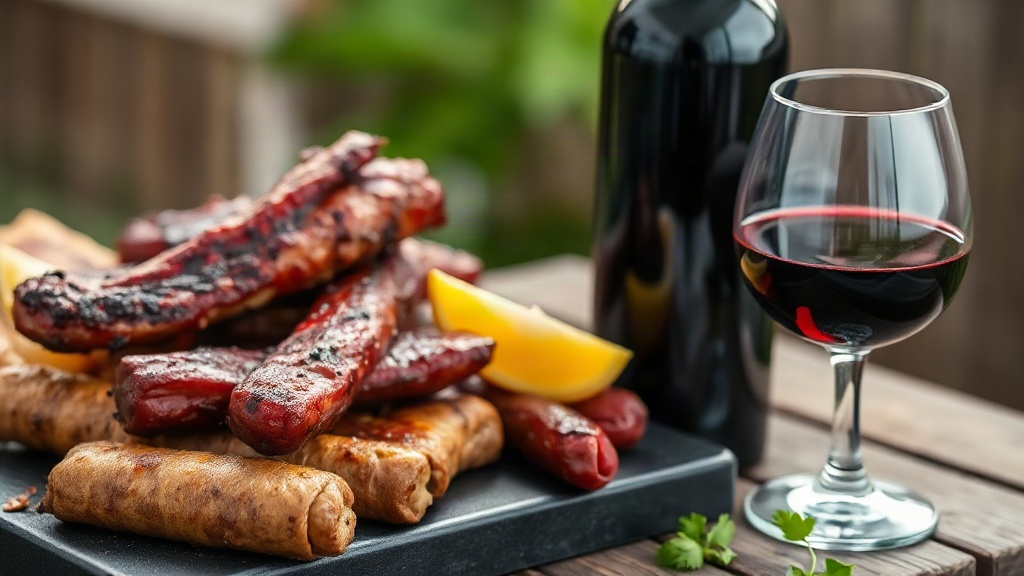
You’ve got a rack of ribs resting on the board, a brisket wrapped in butcher paper, and a bottle of wine on the counter. Which one pours well with smoke and sticky sauce? Getting wine with BBQ right comes down to matching acidity, sweetness, and body to the food in front of you.
Quick answer: Skip delicate or heavily oaked wines. Choose something with bright acidity and a little fruit—a jammy Zinfandel with ribs, a chilled rosé with grilled chicken, or a dry Riesling with pulled pork. The sauce, the smoke, and the char matter more than the meat itself.
This guide explains what makes BBQ pairing different from a normal dinner, the bottles that work best, and the mistakes that make a good brisket taste flat. By the end you’ll know exactly what to open at your next cookout.
What is wine with BBQ?
Wine with BBQ is the practice of choosing bottles that hold up to smoke, sugar, char, and long cooking times. Regular wine pairing focuses on protein and seasoning. Barbecue adds three extra forces: wood smoke, caramelized sauce, and intense charred crust.
That combination changes the rules. Smoke coats your palate and dulls delicate flavors. Sweet, sticky sauces make dry, tannic reds taste bitter. High heat creates bitter char notes that clash with oaky wines. A bottle that shines with roast chicken can fall completely flat against a rack of ribs.
The four styles of barbecue and what they demand
American barbecue alone covers several distinct sauce and smoke profiles. Each pushes wines in a different direction.
- Kansas City: Sweet molasses-based sauce, so you need a wine with matching ripe fruit or a touch of sweetness.
- Texas: Salt-and-pepper brisket with light smoke, so fruit-forward reds with soft tannins work well.
- Memphis: Dry-rubbed ribs with a tangy tomato-vinegar sauce, so acidity in the wine is key.
- Carolina: Vinegar- or mustard-based sauce with sharp tang, so crisp, high-acid whites shine.
Grilled steak or chicken over charcoal is a milder version, closer to ordinary wine pairing.
The core principle: match intensity and manage sweetness
Barbecue is loud food. It wants a loud wine. A light-bodied Pinot Grigio disappears next to burnt ends, and a 15% alcohol Cabernet overwhelms grilled shrimp. Match boldness to boldness, then adjust for sauce.
Sugar is the trickiest variable. Sweet sauce makes dry, tannic reds taste harsh and metallic. A wine with a little residual sugar or very ripe fruit softens that clash. Acidity cuts through fat and resets your palate between bites of brisket or pork shoulder.
Serving a fruity red at around 55°F makes it taste fresher and less alcoholic against smoky meat. Many barbecue regulars chill Zinfandel or Grenache briefly before pouring.
The takeaway: Wine with BBQ means matching three things at once—smoke, sugar, and char. Get those right and the bottle stops fighting the food.
Why wine with BBQ matters
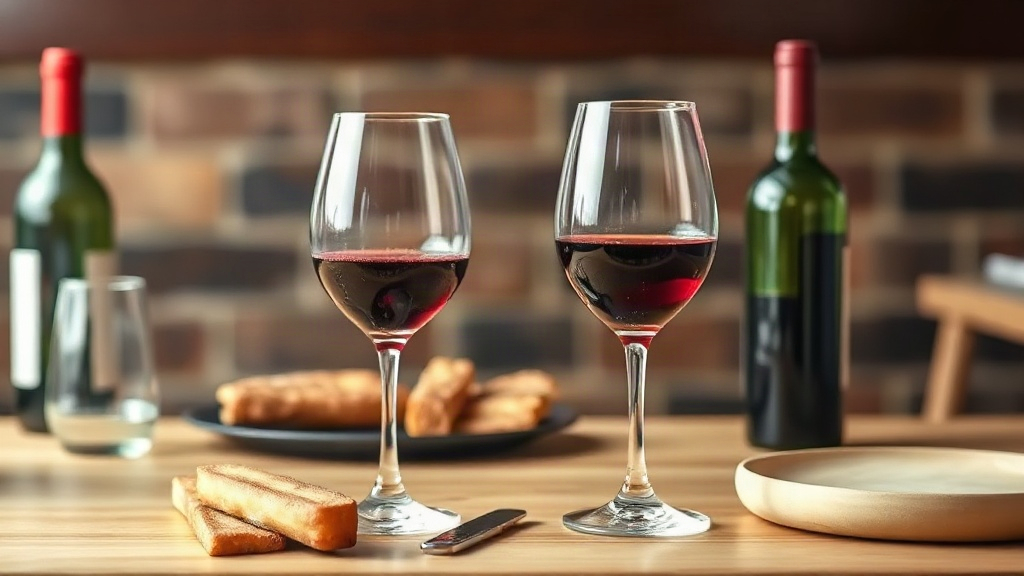
A good pairing makes barbecue better. A bad one makes great barbecue taste ordinary, and most people never realize the wine was the problem.
It fixes the bitterness problem
Smoke and char create bitter compounds that accumulate on your palate. A wine with solid acidity scrubs them away and resets your taste buds. Without that reset, the fifth bite of brisket tastes muddier than the first. This is why tangy, higher-acid wines feel so refreshing next to heavy smoked meat.
It handles fat without exhaustion
Pork shoulder, beef ribs, and brisket are rich. Fat carries flavor but builds up quickly. Tannin and acidity both cut through fat, and the right red keeps a long meal enjoyable instead of heavy. Lean pulled chicken and grilled vegetables need the opposite: a lighter wine that doesn’t bury them.
It earns its place over beer and soda
Sweet tea and soda coat the tongue in sugar, which dulls your ability to taste the meat. Beer works well, but it rarely offers the range of acidity and flavor that wine does. A bottle of off-dry Riesling alongside smoked pork shoulder can taste more layered than any lager. That’s why serious pitmasters increasingly build short wine lists next to their beer coolers.
It makes hosting easier and more memorable
Guests remember a surprising pairing—a chilled Beaujolais with ribs, or sparkling wine with smoked chicken. Wine also suits slow, social cookouts, where a long meal unfolds over hours.
The right bottle doesn’t just complement the food. It cleans your palate, cuts fat, and makes each bite taste as good as the first.
The takeaway: Pairing matters because barbecue is rich, smoky, and sweet all at once. A well-chosen wine keeps that intensity enjoyable from first bite to last.
Best practices
These guidelines cover the decisions that matter most at the grill.
Start with the sauce, then the meat
Sauce determines more of the pairing than the protein does. Taste the sauce first, then choose a wine that echoes its dominant note:
- Sweet tomato-molasses sauces: jammy Zinfandel, Primitivo, or off-dry rosé.
- Vinegar-based Carolina sauce: dry Riesling, Sauvignon Blanc, or a crisp Gamay.
- Mustard-based sauce: Grüner Veltliner or dry Chenin Blanc.
- Dry rub with no sauce: Syrah, Malbec, or Tempranillo.
- Homemade chimichurri or herb sauce: Malbec or a juicy Grenache blend.
Pick wines with acidity and moderate tannin
High tannin plus smoke and char equals a bitter, drying mouthfeel. Choose reds with ripe fruit and softer tannins instead of young, structured Bordeaux. Whites need zip: Riesling, Albariño, and Sauvignon Blanc all hold up better than buttery Chardonnay.
Match body to the cut
A rough guide that works across most cookouts:
| Barbecue cut | Best wine style | Example grapes |
|---|---|---|
| Brisket, beef ribs | Medium-to-full red, soft tannin | Zinfandel, Syrah, Malbec |
| Pulled pork, ribs | Fruity red or off-dry white | Beaujolais, Riesling |
| Grilled chicken | Crisp white or light red | Sauvignon Blanc, Gamay |
| Smoked sausages | Bold, peppery red | Syrah, Petite Sirah |
| Grilled vegetables | Dry rosé or sparkling | Grenache rosé, Cava |
Serve at the right temperature
Barbecue happens outdoors, often in warm weather. Reds taste flabby and alcoholic at 80°F, so chill them for 15 to 20 minutes first. Whites and rosés should stay cold; use an ice bucket and top it up through the meal.
Keep it simple and buy enough
Two wines—one red, one crisp white—cover almost any cookout menu. Plan on one bottle per two to three guests who are drinking wine, and offer a non-alcoholic option too.
The takeaway: Choose by sauce, favor acidity over tannin, and serve everything cooler than you think. These three habits solve most pairing problems.
Common mistakes to avoid
Most disappointing barbecue pairings trace back to a handful of predictable errors.
Reaching for the biggest, boldest red
It feels intuitive: big meat, big wine. In practice, a heavily oaked, high-tannin Cabernet or young Bordeaux turns harsh next to sweet sauce and char. Boldness matters, but soft, ripe fruit beats sheer structure nearly every time.
Serving whites too warm and reds too hot
A warm white tastes flat and alcoholic. A warm red tastes stewy. At an outdoor cookout, bottles heat up fast in the sun, so keep them shaded and replenished with ice.
Ignoring the sugar in the sauce
Sweet glaze plus dry, tannic wine equals bitterness. If your sauce is sticky and sweet, pick a wine with ripe fruit or a hint of sweetness rather than a bone-dry, austere red.
Serving delicate wines with heavy barbecue
A light Pinot Grigio or a fragile old Burgundy vanishes under smoke and char. Match intensity first, then refine. Simple, fruit-driven bottles often outperform expensive, delicate ones at a cookout.
Overthinking the glassware and the price tag
Barbecue is casual. A sturdy tumbler or a simple universal glass works fine outdoors, and a $15 to $25 bottle with good acidity can outperform a $60 bottle chosen for prestige. Save the special bottles for a quieter meal.
Forgetting the sides and non-drinkers
Cornbread, coleslaw, and baked beans land on the same plate. A versatile off-dry white or juicy red handles those sweet and tangy sides better than a stern red. Keep water and a non-alcoholic option within reach for guests who aren’t drinking.
Barbecue meals stretch over hours in the heat. Alternate each glass with water so the pairing stays enjoyable and everyone stays safe.
The takeaway: Avoid the boldest, driest, and most expensive bottles by default. Choose based on sauce, temperature, and the casual setting instead.
FAQ
What is the best wine with BBQ ribs?
A fruity, moderate-tannin red such as Zinfandel or Beaujolais handles sticky Kansas City–style ribs well. For vinegar-based sauces, a dry Riesling or crisp Gamay keeps things fresh. Match the sauce first and the meat second.
Can I serve red wine with grilled chicken?
Yes, provided it’s light. A chilled Gamay or Grenache works nicely with smoky grilled chicken. If the chicken comes with a sweet glaze, an off-dry white such as Riesling is the safer choice.
How much wine should I buy for a barbecue?
Plan on roughly one bottle per two to three wine-drinking guests for a meal of a few hours. Buy a mix: about two-thirds red and one-third crisp white or rosé to cover different plates.
Should barbecue wine be served chilled?
Whites, rosés, and sparkling wines should be well chilled. Fruity reds benefit from 15 to 20 minutes in the fridge before serving. Warm outdoor temperatures push both toward tasting flat or hot.
Is cheaper wine fine for a cookout?
Yes. A $15 to $25 bottle with bright acidity and ripe fruit often beats an expensive, tannic red against smoked meat. Barbecue rewards the right style far more than the price tag.
Conclusion
Pairing wine with BBQ rewards a few simple habits. Taste the sauce before you choose the bottle. Favor acidity and ripe fruit over heavy tannin. Serve reds slightly cool and whites properly cold. Keep the setting casual and the price sensible.
Those choices turn a good cookout into a memorable one, and they work whether you’re smoking brisket or grilling chicken. For your next barbecue, buy one jammy red and one crisp off-dry white, chill both properly, and let guests compare which they prefer with each plate. You’ll learn your own palate fast, and the brisket will taste better for it.